
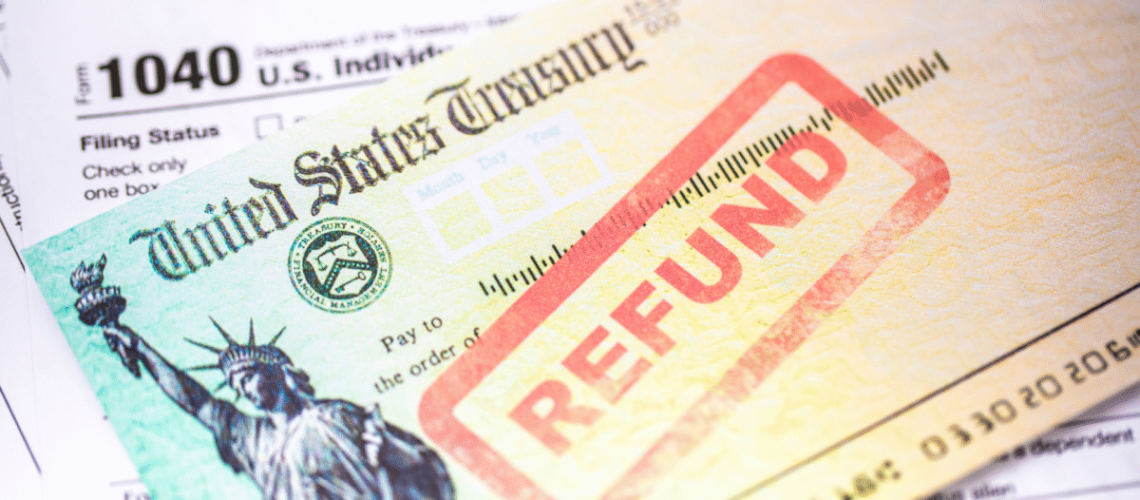
On March 25, 2025, President Trump signed an executive order requiring all federal agencies to cease the use of paper checks. As we wrote about on our blog last fall, Federal agencies were expected to eliminate the use of paper checks by September 30, 2025. Some of the roll-out was slower than anticipated, but the when it comes to tax refunds and payments, the IRS is proactively taking steps to switch to electronic payments.
Can I Get My Refund on a Paper Check?
According to the IRS Fact Sheet 2026-02, the short answer is yes – but it’s going to take a long time before you can get it.
No changes are being made to the process of filing a tax return. For many years, tax returns have included a section for bank account details to allow direct deposits of any refunds. There are also a few alternative electronic payment methods available, such as certain mobile apps and pre-paid debit cards. If you provide new bank account details, this will not delay any electronic refunds. However, if you do not provide any bank details, there will be extra steps (and time) before a paper check is issued.
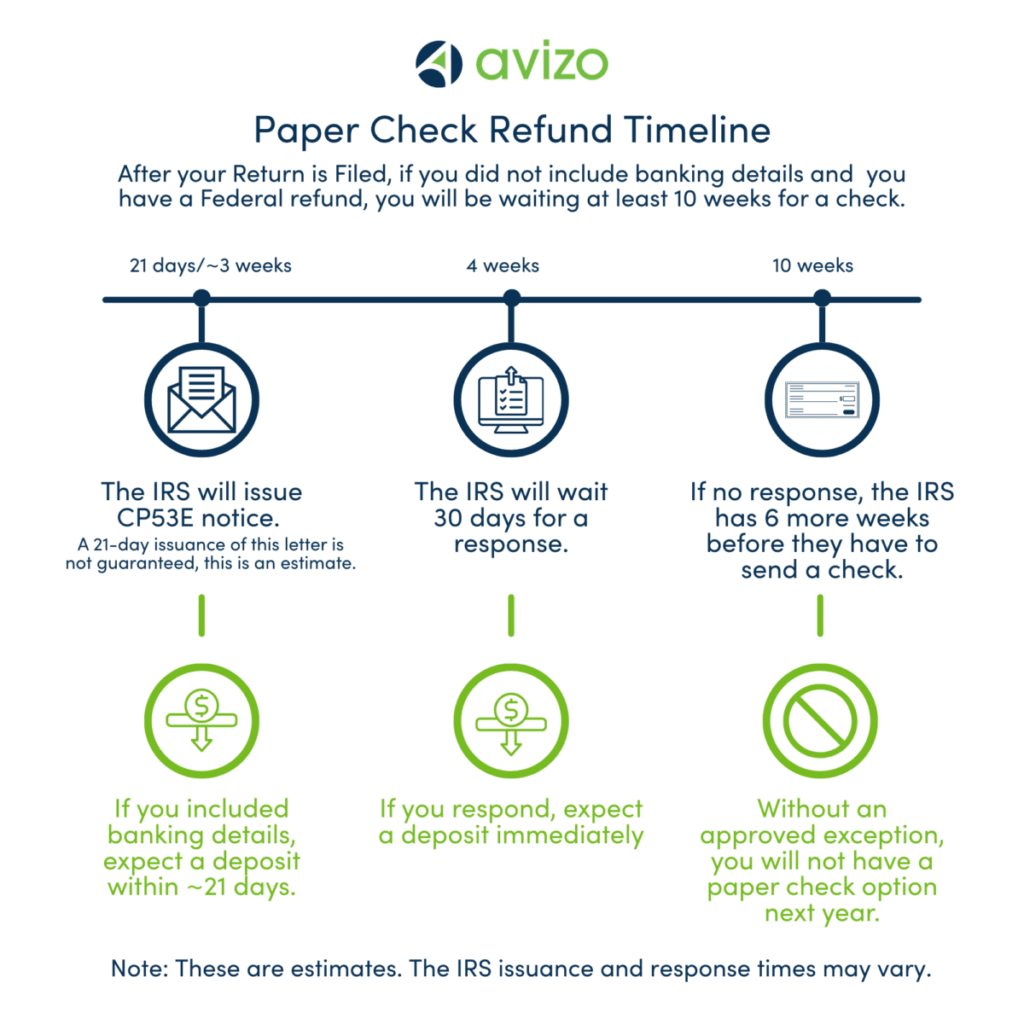
- If you do not provide your banking details on your tax return and you are due a refund, the first step will be a notice. The IRS will send you a CP53E notice using your last-known address on record asking you to update your bank account information. There is no timeline stated on the timeline between when you file and when this notice must be issued, so you will be waiting an indefinite amount of time.
- Once you receive the notice, the IRS will wait for 30 days for you to provide banking details or an explanation as to why you cannot comply. If you respond to the notice with banking details, your refund will be sent immediately.
- If you do not respond to the notice within the 30-day timeframe a paper check will be sent after 6 more weeks. In total, it will be months before you receive a paper check refund.
IRS Notice Information
Please note that the CP53E notice is likely going to be a targeted attempt for fraudsters who would also like to get your banking details. The IRS will never call or text to request banking details. You will only receive the written correspondence from them and you should provide banking details only to your CPA or directly to the IRS through an IRS Individual Online Account.
Can I Pay My Tax Bill With a Paper Check?
For now, yes. Mailed payments to the IRS including cash, check, and money orders will continue to be accepted and processed. The IRS is transitioning these payment to electronic as well, so if you elect to send a check, please know that this may be one of the last times you will be able to do so.
There are many details and alternative payment options listed with in the IRS Fact Sheet, so if you have additional questions, please review the information linked here, and reach out to your CPA if you have any questions

Chris VanArsdale
Chris is a Manager in our tax department with over 10 years of experience. His specialties include international, trust and estate, and business tax filings.
