
Understanding your cash flow is one of the most important aspects of running a successful small business. While revenue and profit often get the most attention in conversations with business owners, cash flow is what determines whether you can cover payroll, pay your vendors, invest in growth, and handle unexpected expenses that may pop up. Without having the right software and processes in place, you may not have consistent visibility into how money moves in and out. Our team can work with you to develop proactive cash flow forecasting to help your business stay financially aware.
Why is Cash Flow Forecasting Important?
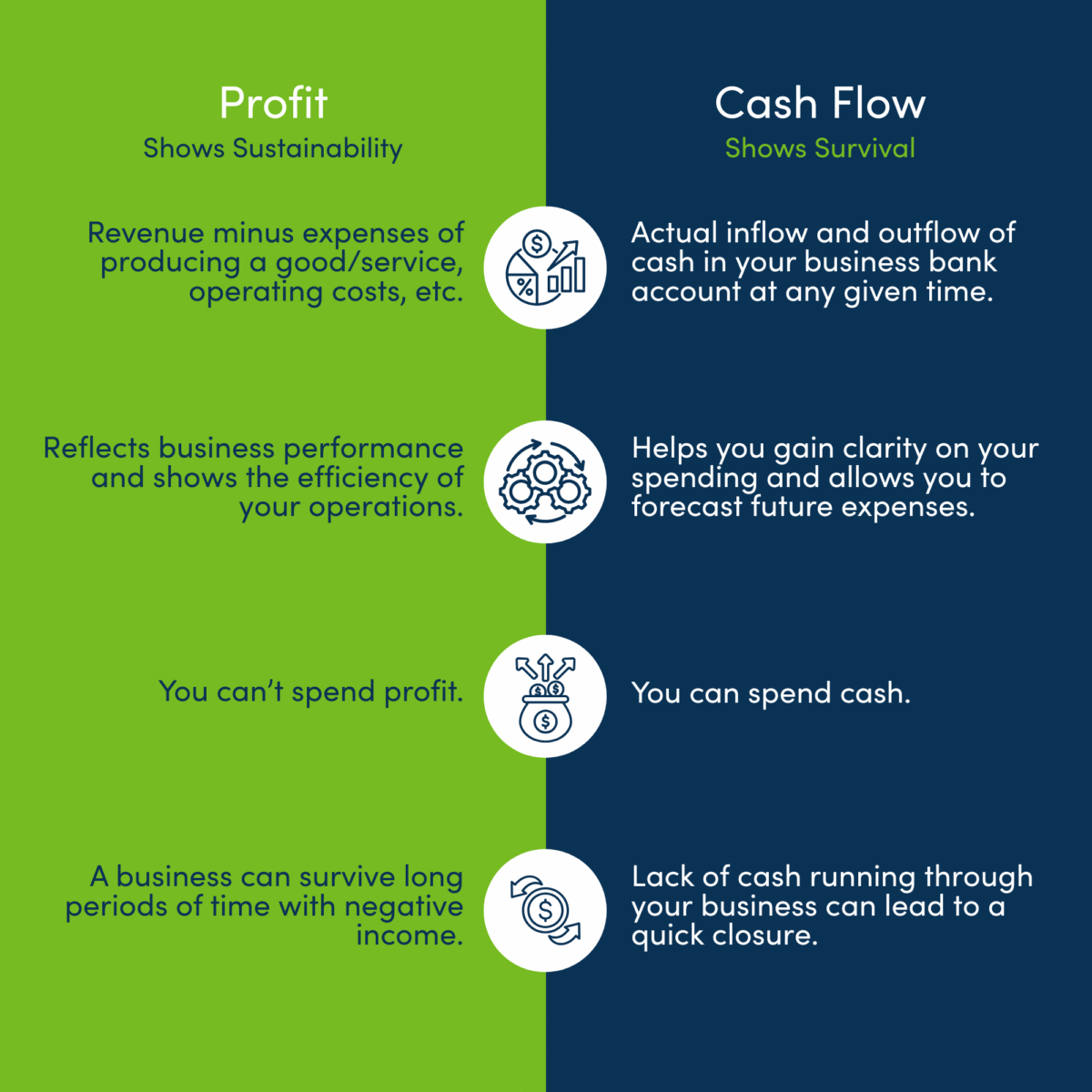
Cash flow forecasting helps business owners plan ahead for both planned and unplanned expenses because it gives you a better understanding of what is in your business, and when. Often, profit steals the show and that’s what business owners focus in on, but cash flow is the tangible lifeforce of your business, so you need to keep a close eye on it.
Profit is your revenue minus expenses and is generally calculated at certain periods of time – such as at the end of the month, quarter, or year. While a positive profit can look good on paper, it doesn’t mean you have any cash ready to spend or invest.
Cash flow is the actual amount of money moving in and out of your bank account. Cash flow gives you insight into the timing of financial-based decisions because it focuses on liquidity – you need cash to pay your rent, employee salaries, and other bills.
What will Cash Flow Forecasting Show You
Cashflow can help you recognize how often customers pay late, how much money is invested in sitting inventory, and big payments going in and out (like tax bills and loans). Here are the basics of what you’ll see in a cashflow report:
- Opening balance for the period of time
- Receipts – each one broken down by item/classification
- Total receipts
- Payments, each one broken down by item/classification
- Total payments
- New movement – you may want to look at this based on each item/classification
- Closing balance for the period
When starting out, if you’re trying to make financial decisions and gain a true understanding of your input and output, we recommend a weekly report. You can also build out this report for longer-term to show monthly or annual cashflow, but reviewing a shorter period of time for a few months will give you the helpful insights needed for accurate budgeting.
Benefits of Cash Flow Forecasting
Budgeting and forecasting is one of the consulting services many small business owners see a quick and direct benefit from. Our team can work with you to get this report set up in your reporting dashboard such as QBO or Xero and establish monthly or quarterly check-in meetings to help you review what is in your report. Here are some of the value you’ll get from cashflow forecasting:
- Prevent Cash Shortages: Identify when cash may run low in your cycle and make proactive adjustments to your spending or your collections/promotions to move products/services.
- Improved Planning: After some time, you can look back on historical cash flow data to see patterns in the fluctuations of cash throughout a month/year, which serves as a good basis for making future projections.
- Confidence in Financing: Having this data can demonstrate financial stability to lenders because it isn’t static information – it shows the financial reality of your business and can help you if you need a loan.
If you are running a small business, cashflow forecasting is one of the most important tools you have access to that can make an identifiable impact. Set up a consultation to get your reports started to ensure your business stays on track for growth.

Taylor Clinkenbeard, CPA
Taylor is a Manager in our tax and client accounting services teams. She has developed specific expertise in software, accounting processes, and tax laws to serve our clients.
